AI-augmented product practice

AI tightens the loop: from intent to evidence to action.

Strategy, research, design, and code no longer have to wait their turn. AI gets a team from a premise to a working artifact faster. Leadership sets the outcome, reads the evidence, and decides what the next pass needs to prove.

What the system notices now

Live agents watch a few things I care about. They speak when a connection becomes timely, useful, or strange — and go quiet when it does not.

Watching for a clean signal…

AI timeline

What I’m tracking

Short dispatches on where the technology is heading and what it changes for building products. One card at a time — arrows, click the center or right card to move forward, click left to go back, or scroll sideways.

June 2026

The loop is starting to close on itself: build, test, inspect, repair, with less of a person in the middle each month. What I’m watching is where it should stop — which calls stay human when the machine can technically make the pass, and how you keep any of it pointed at real customers instead of its own scorecard.

April 2026

Attention moved off the model and onto everything around it — what context it’s handed, what tools it can reach, where a person still signs off. There’s a name for it now, context engineering, and it marks the moment the model became a component instead of the product.

February 2026

Evaluation became what everyone talks about. Teams started writing success down as checks they can actually run, rather than settling it by opinion in a review. It’s the first real quality bar I’ve seen for systems that don’t give the same answer twice.

November 2025

Agents left the chat window. The model stopped waiting for the next instruction and started running its own short loops — try, check, adjust. The question changed from what a model can say to how much of a task it can carry before it needs a person again.

July 2025

The work shifted from describing things to standing them up. Instead of a deck about an idea, you could put a working version in front of people and let them push on it. A room arguing with something real, instead of imagining it, was the tell that the ground had moved.

March 2025

Everyone learned to prompt this spring. The field filled with technique: personas, phrasing, step-by-step reasoning, all of it treating the model as the whole machine. I kept thinking the real leverage would end up somewhere the wording of a request couldn’t reach.

November 2024

Generation stopped being the hard part. A credible first draft of almost anything is seconds away now, and the models crossed from novelty to dependable inside a single year. The bottleneck moved — and most teams were still optimizing the part that had just gotten cheap.

Where AI helps, and what people still own

The division of labor matters.

AI opens more directions and makes working artifacts cheaper to produce. It does not define the problem, understand the promise the brand has made, or decide which answer deserves investment.

Phase
Where AI helps
What people still own
Project parameters
Pulls in constraints, precedent, and analogous work fast, so you are not staring at a blank wall.
Naming the problem, the audience, and what would actually count as a win. The model cannot infer that from an empty brief.
Success criteria
Spells out metrics, pokes at them, and surfaces blind spots you might not have named yet.
Keeping the bar honest: what users need, what the business can stand behind, and where those two have to meet.
Exploration
Opens branches you would not have time to draw by hand: different aesthetics, odd combinations, and directions you might not have walked alone.
Understanding the creative trajectory and separating signal from noise.
Refinement
Keeps producing alternatives and what-ifs until you call it off. Volume without the all-nighter.
Knowing what to keep, what to combine, and what to let go requires a human grasp of the core concept, the brand message, and the development cadence.
Polish
Speeds up execution and the pixel-level pass once the direction is clear.
Final scrutiny as the stakeholder. Slow down, step away, come back with fresh eyes, and revise until it holds up.
Keep the work open

Working with AI means resisting the false relief of the first good answer. A plausible answer can arrive quickly now, which makes it easier to confuse momentum with quality.

The discipline is knowing when to stay with the problem a little longer: test another direction, sharpen the criteria, combine what almost worked, and do not accept output simply because it looks polished. The opportunity is not to generate endlessly; it is to keep the work open long enough for a better answer to emerge.

What not to do

  • Do not freeze the workflow. Everything is changing too quickly. Keep the way you work open to revision.
  • Do not outsource the judgment. AI generates options. People make the call on what holds up.
  • Do not mistake volume for progress. More drafts only matter if they sharpen the decision.
  • Do not treat AI as a separate practice. Anchor it to the brand and business strategy. Those are the guardrails everything else has to honor.

In practice

Working prototypes change the conversation.

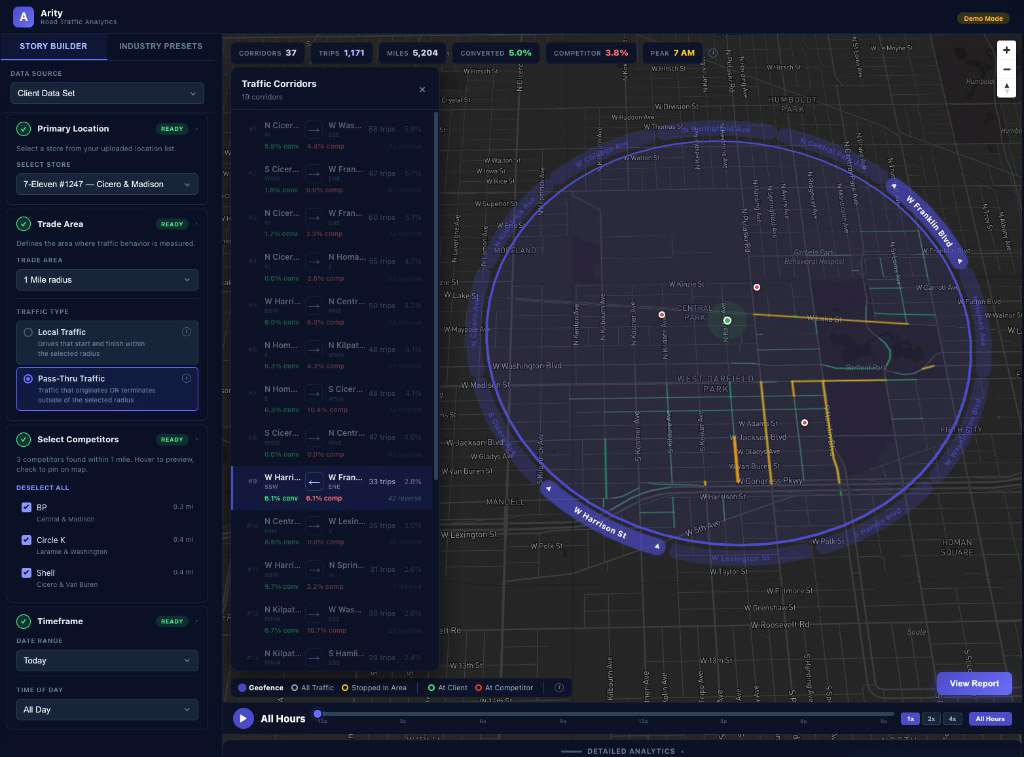
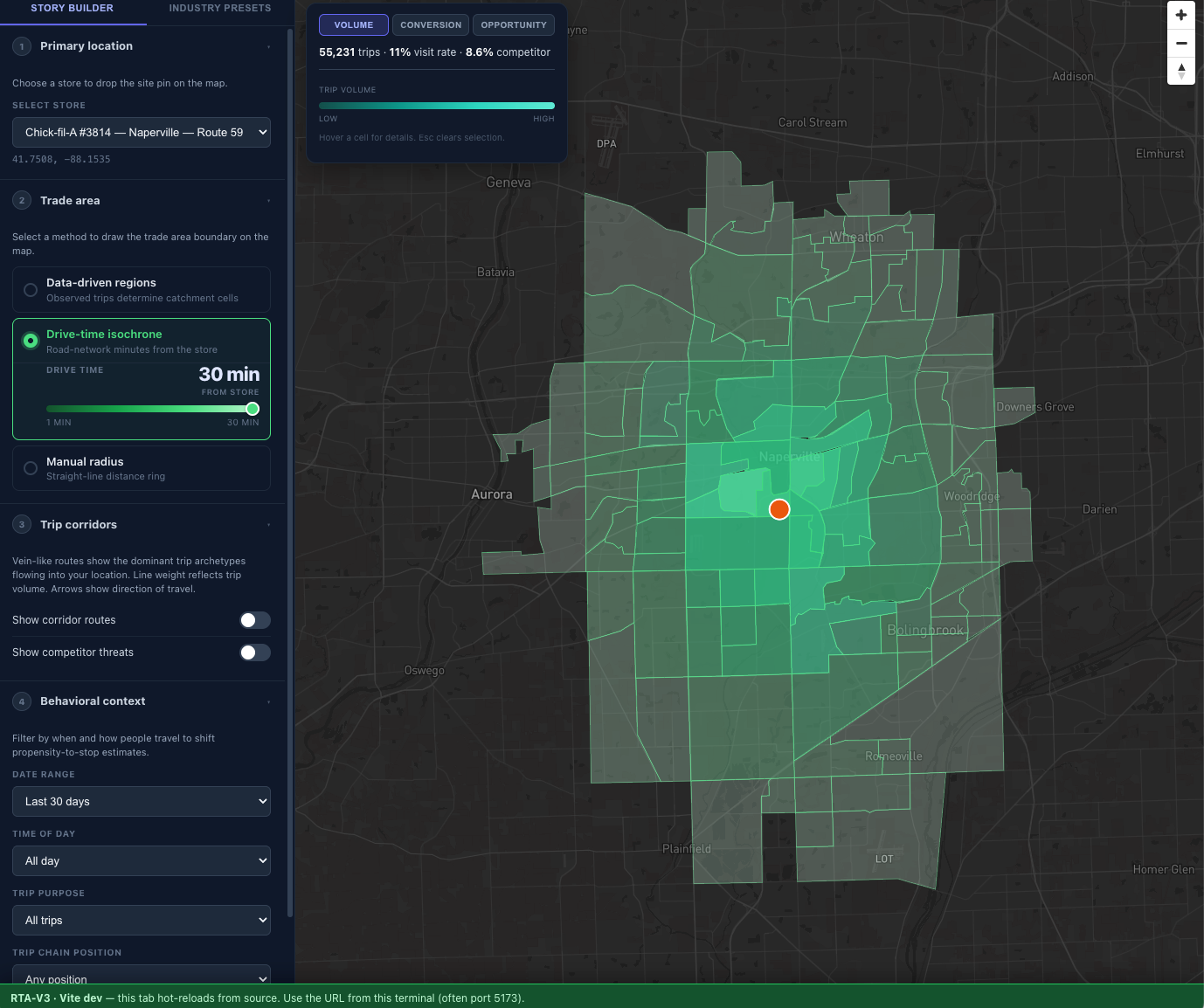
At Arity, I used this workflow to make new-market opportunities tangible. The desktop prototypes gave product, engineering, analytics, sales, and prospective partners the same artifact to question together.

Arity RTA desktop prototype showing dynamic retail trade areas
RTA story builder: turning driving patterns into a retail trade-area model.
Desktop GTM prototype demonstrating retail location-intelligence integration
Location intelligence: showing how trip volume and drive-time patterns could shape a market view.
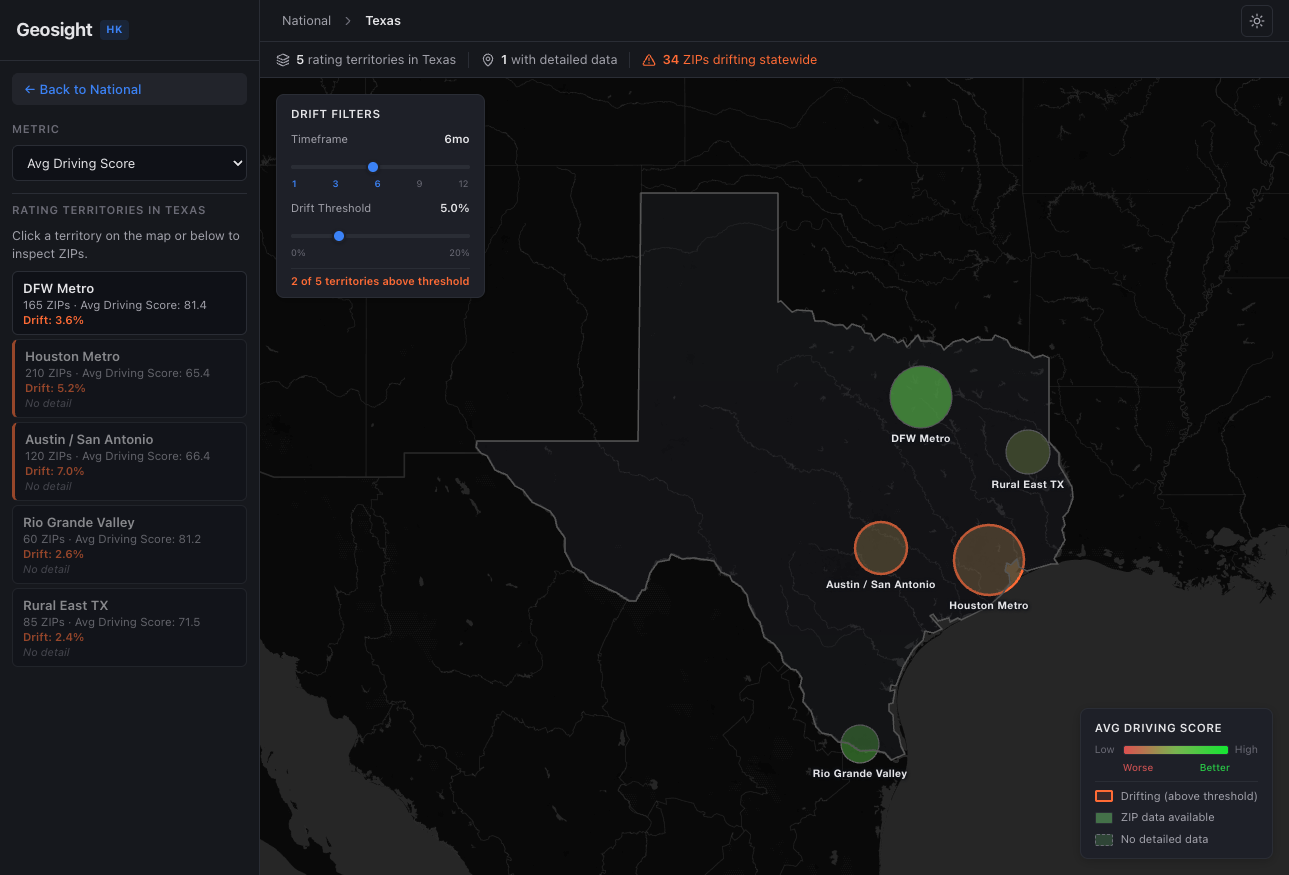
Arity Geosight desktop prototype showing road-segment driving behavior across Texas
Geosight: making statewide driving behavior legible as a product and market story.

Better artifacts are useful. Better decisions are the point.

The payoff is not an AI demonstration. It is a team that can see the same product direction, challenge it with evidence, and decide what to do next.

Back to Leadership