The situation
What we were solving Between impact and repair, auto claimants hit fear peaks the claims funnel was not built to address. Over four in24 days we mapped Catherine’s anxiety arc, cut fifty-one ideas to five, and shipped concepts tied to the moments she was most afraid.
Between the moment of impact and the moment her car is fixed, your customer is afraid.
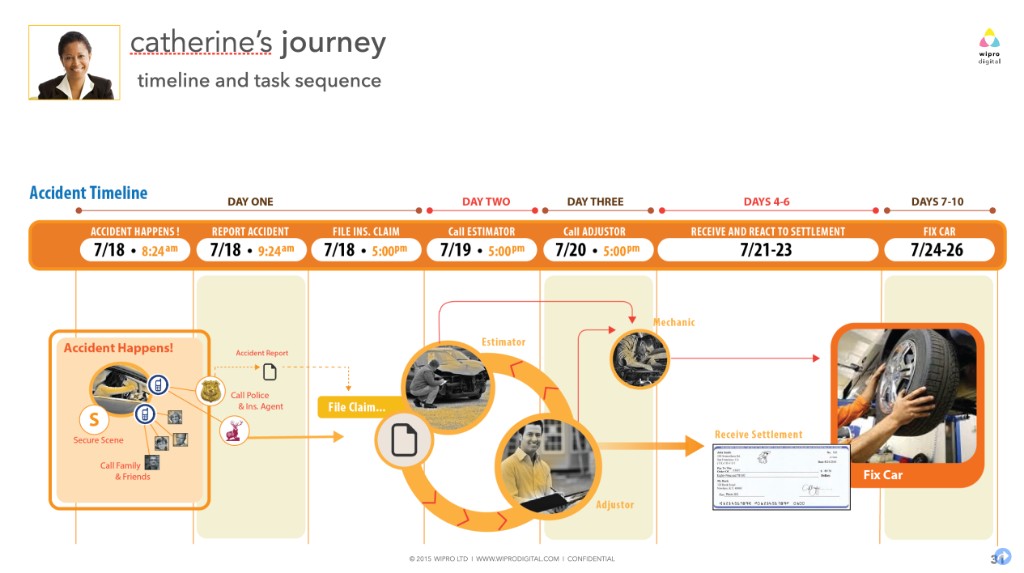
Catherine is thirty-eight. Kids in the back, on the way to work. Another driver runs a light. From the second of impact to the day she picks her car up from the body shop is roughly ten days. Inside those ten days, she is more frightened of more different things, more often, than at any other point in her relationship with The Hartford.
The conventional brief would have asked us to optimize each step of the claims funnel. We refused the brief. The actual question was: where on this journey is Catherine most afraid, and what does design owe her at those moments? Everything else — the API, the dashboard, the call-center script — is scaffolding around that.
Evidence
Four and a half minutes of the workshop, the partner, and the team.
Filmed during the in24 in our NY studio. The Hartford’s digital lead is speaking. The format, the room, and the working method are the same one we ran the year before for Cancer Care Ontario — documented in WeCare.
4:25 · The Hartford inSure, Wipro Digital in24
“You choose them because what they stand for aligns with what you stand for.”
Approach
Day and a half to map her. Two and a half days to ship five.
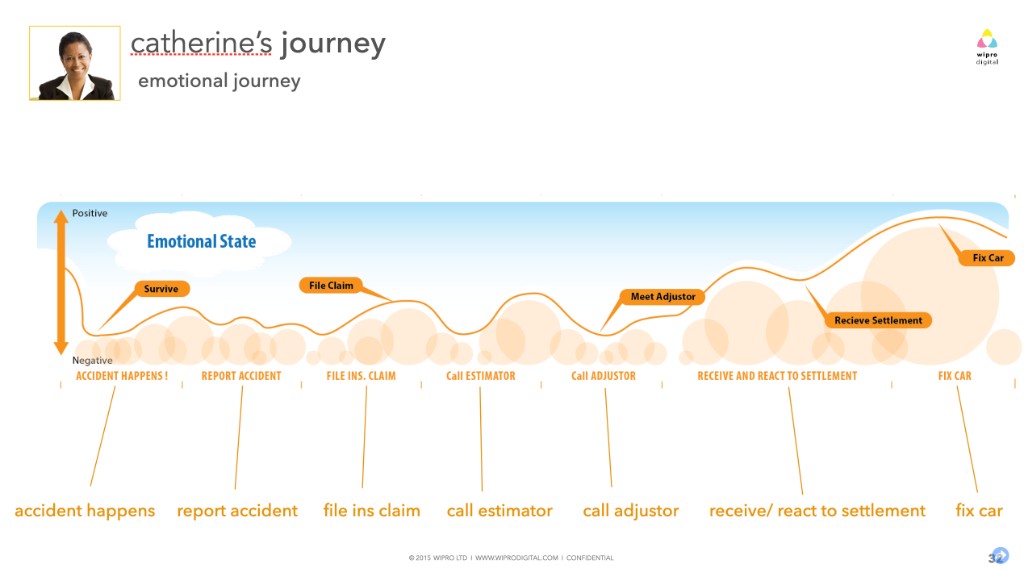
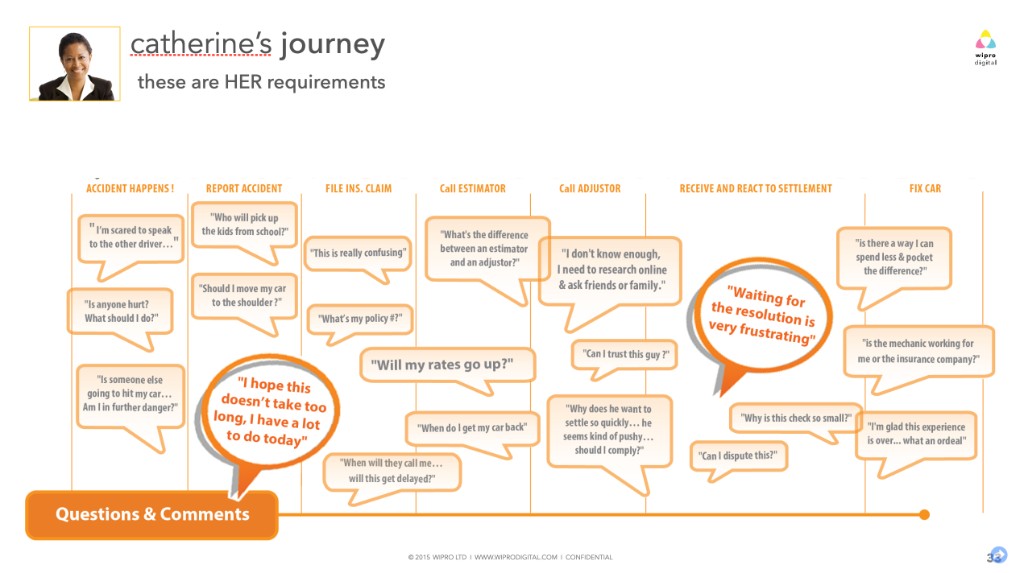
Four days, one room, a cross-disciplinary team, a real customer of The Hartford in the room, and a non-negotiable artifact at the end. We mapped Catherine’s journey in three layers — tasks, emotions, her own words — then ideated, voted, and cut fifty-one ideas down to five.
Days 2–4 — Solutioning
Fifty-one ideas. Then five.
By end of day one and a half the map was the brief. Every idea had to anchor on a peak of Catherine’s wave or it didn’t survive the wall. The cut from fifty-one to five happened in the room — stress-tested against the wave, not voted on popularity.
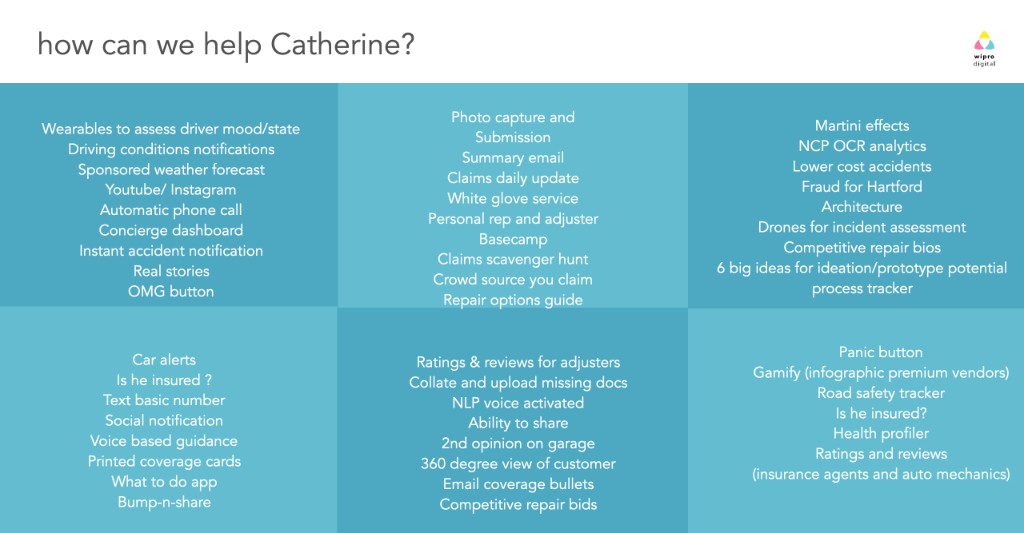
The five
Each fear peak got its own concept, not a generic funnel fix.
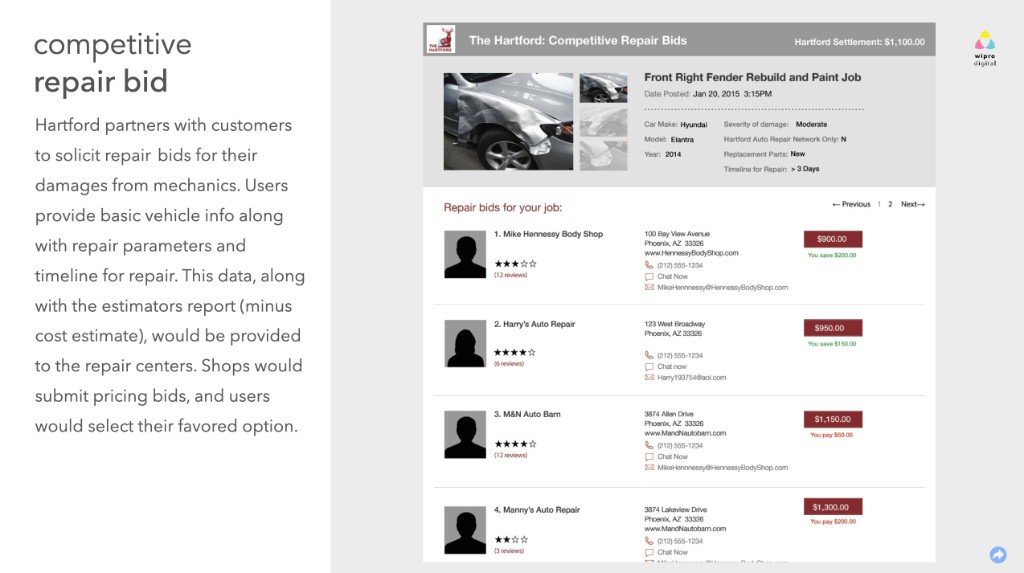
Two of them — Real Stories and repair bids — deliberately invited third-party scrutiny of The Hartford’s own process.
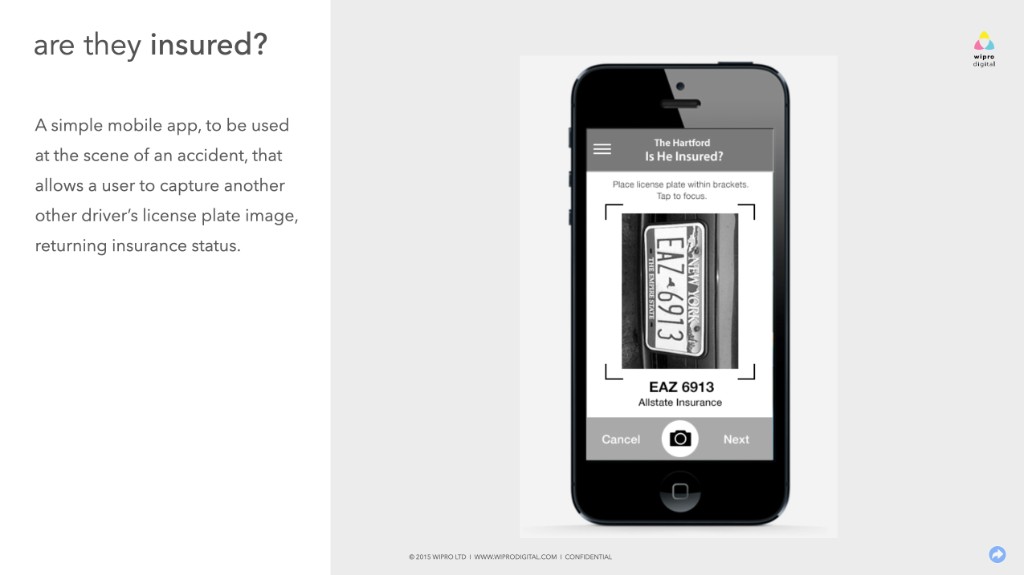
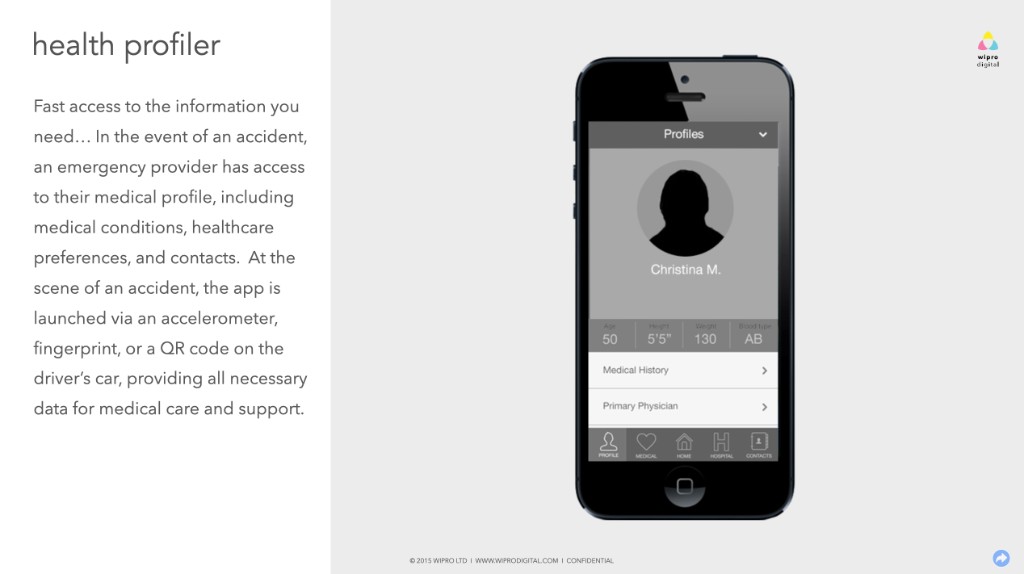
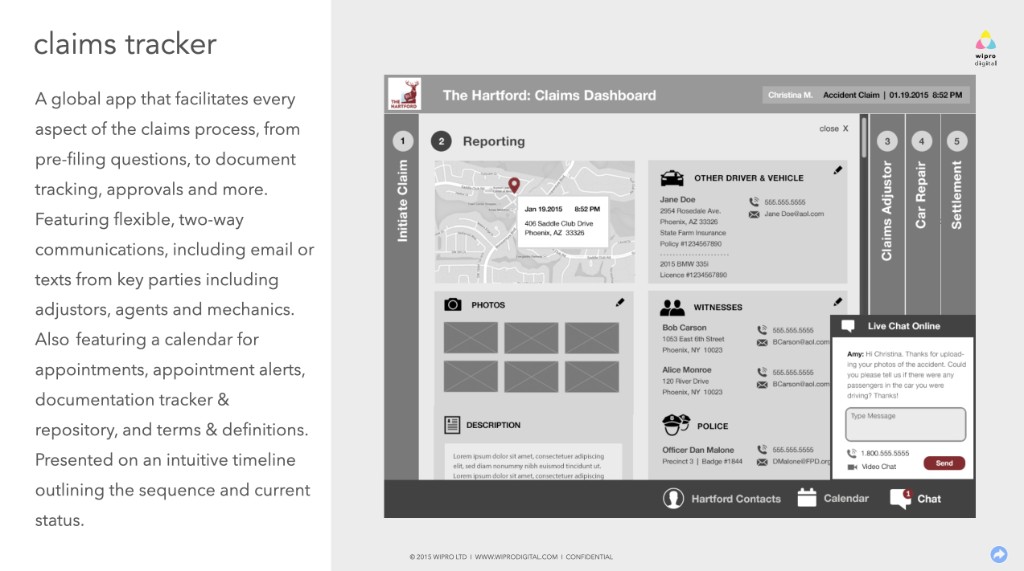
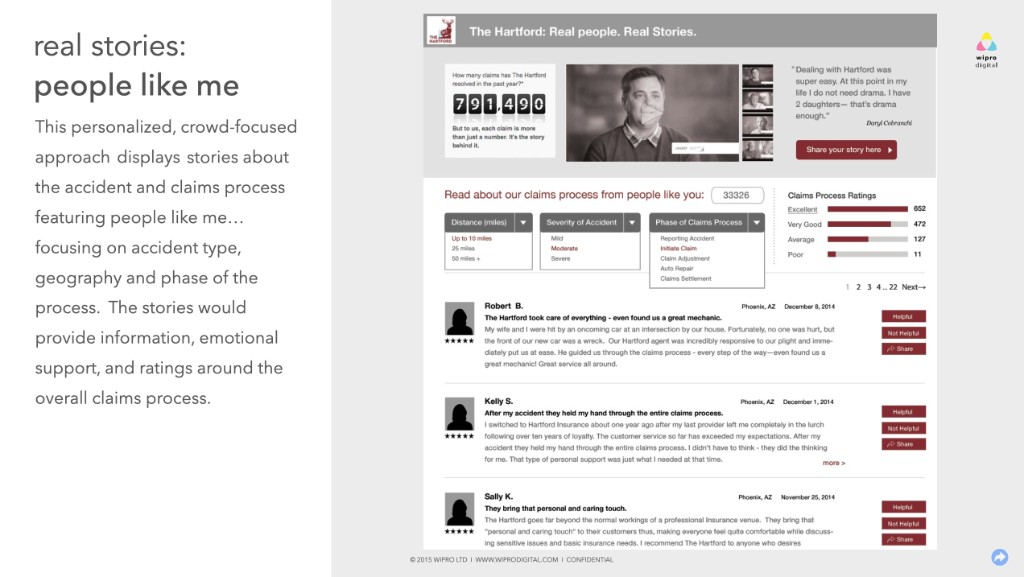
The five decisions
These are the calls I made, and why.
Start with fear, not features.
The Hartford’s expectation was an optimized claims funnel. I argued for a different brief: map where Catherine is most afraid, build only for those moments. Defend that call on day one or you spend the week building a better claims department instead of building for Catherine.
Catherine, not “the claimant.”
One specific person, in the room, that every idea had to answer to. Personas as a deliverable are a waste of time. Personas as a discipline are how you keep the team honest when the conversation drifts toward what’s easy to build.
Map the emotion first. The task is second.
The emotional arc became the geometry everything else was built on. Where Catherine’s line went flat, design did less. Where it spiked, design showed up for her.
The fifty-one-to-five cut was a stress test, not a vote.
Three questions per idea: does it sit at a real peak on the wave, can The Hartford ship it inside a year, would Catherine believe it was actually helping her? Several beloved ideas failed the third. The cut happened in the room, not on the train home.
Design across the trust line.
Real Stories and repair bids put The Hartford in a posture carriers don’t love — peer reviews of their own process, open bidding against the settlement number. That was strategic, not brave. Loyalty across the next decade requires behaving like a party she can trust to play fair against themselves.
Outcome
What The Hartford took home.
Five worked concepts and the framework that produced them. Catherine’s wave became the structural reference for subsequent engagements. Two concepts moved into their innovation backlog the next quarter. The same in24 format had run at Cancer Care Ontario the year before — the pattern that held across both was anchoring everything on one specific person whose week the work had to make better.