The situation
What we were solving RIM lost track of LATAM prospects when dealers switched buyers to competing phones before the sale closed. We mapped a digital distribution strategy and designed an online lead-gen flow — from storefront entry through checkout and dealer fulfillment — that kept customer ownership with RIM.
Interest online, silence in the store.
RIM asked us to map a digital distribution strategy that solved a tracking and conversion problem they had in Latin America. The point of failure was at the local dealer. RIM routed prospects to LATAM retail partners, and those partners would often switch buyers to competing handsets before the sale closed. When a dealer redirected a prospect, or simply never reported the outcome, RIM lost the consumer ID and any read on where the customer stood.
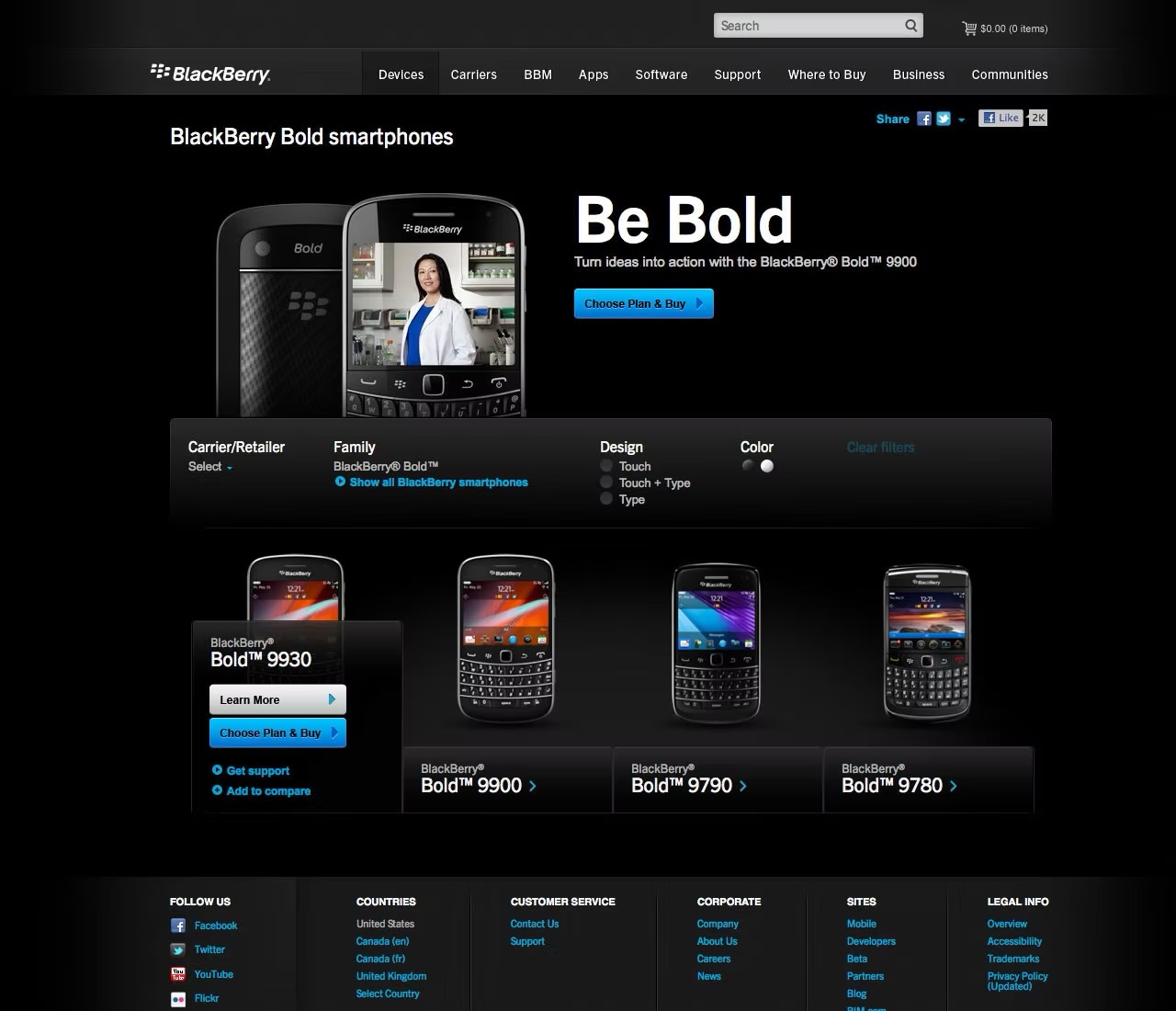
RIM could drive traffic and generate leads. What they couldn’t do reliably was follow those leads through to a sale. Comparison across models wasn’t clear enough on the site. Offers and incentives didn’t always carry into the dealer conversation. And because the handoff was loose, RIM was spending on marketing without a dependable record of who converted, who didn’t, and who got steered toward a competitor at the counter.
We needed to keep dealers in the fulfillment chain, not cut them out. The answer wasn’t to bypass retail. It was to send dealers a completed sale instead of an open prospect, and to make sure RIM held the customer relationship from first click forward.
The work
Lead gen online, fulfillment at the dealer.
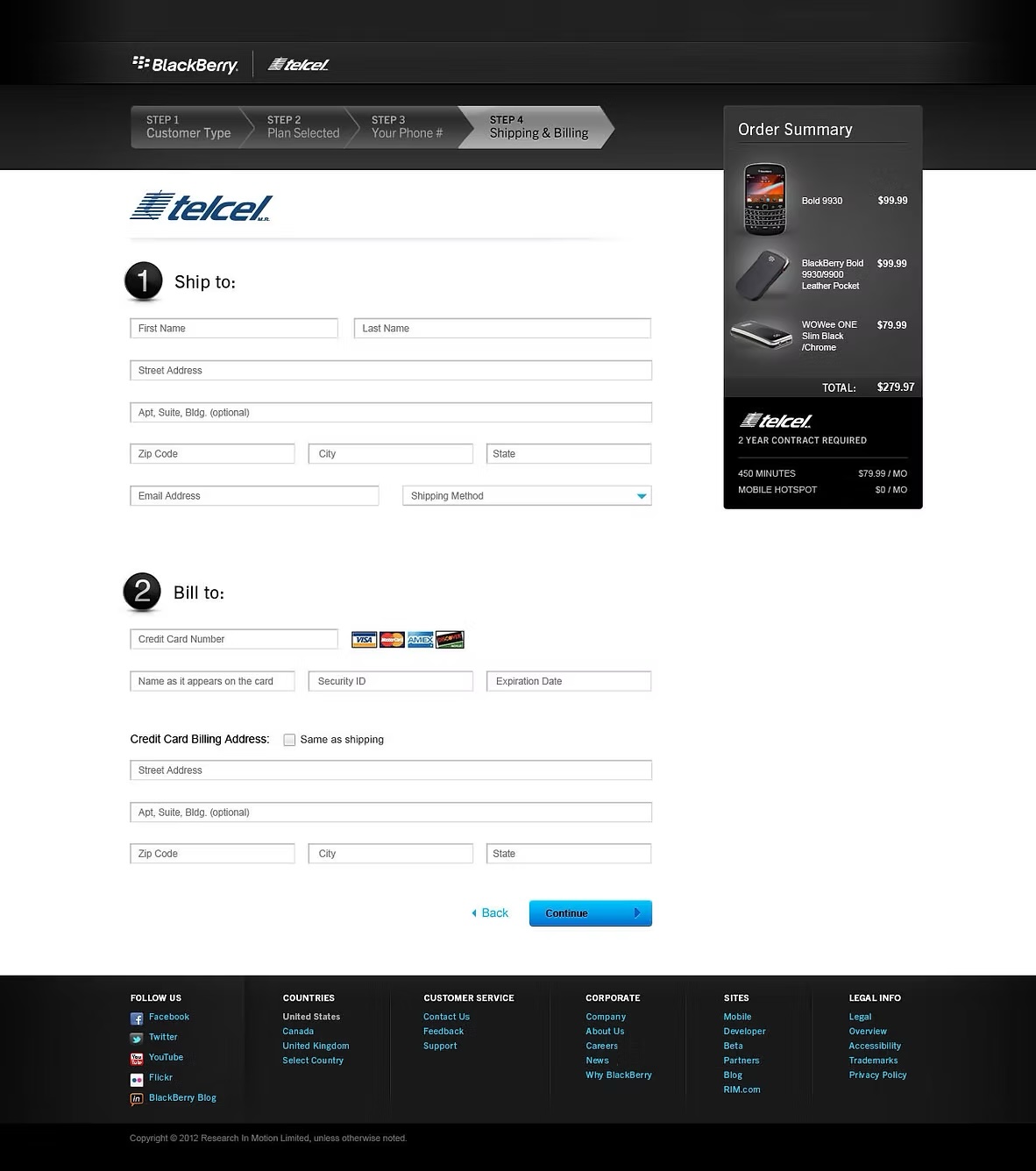
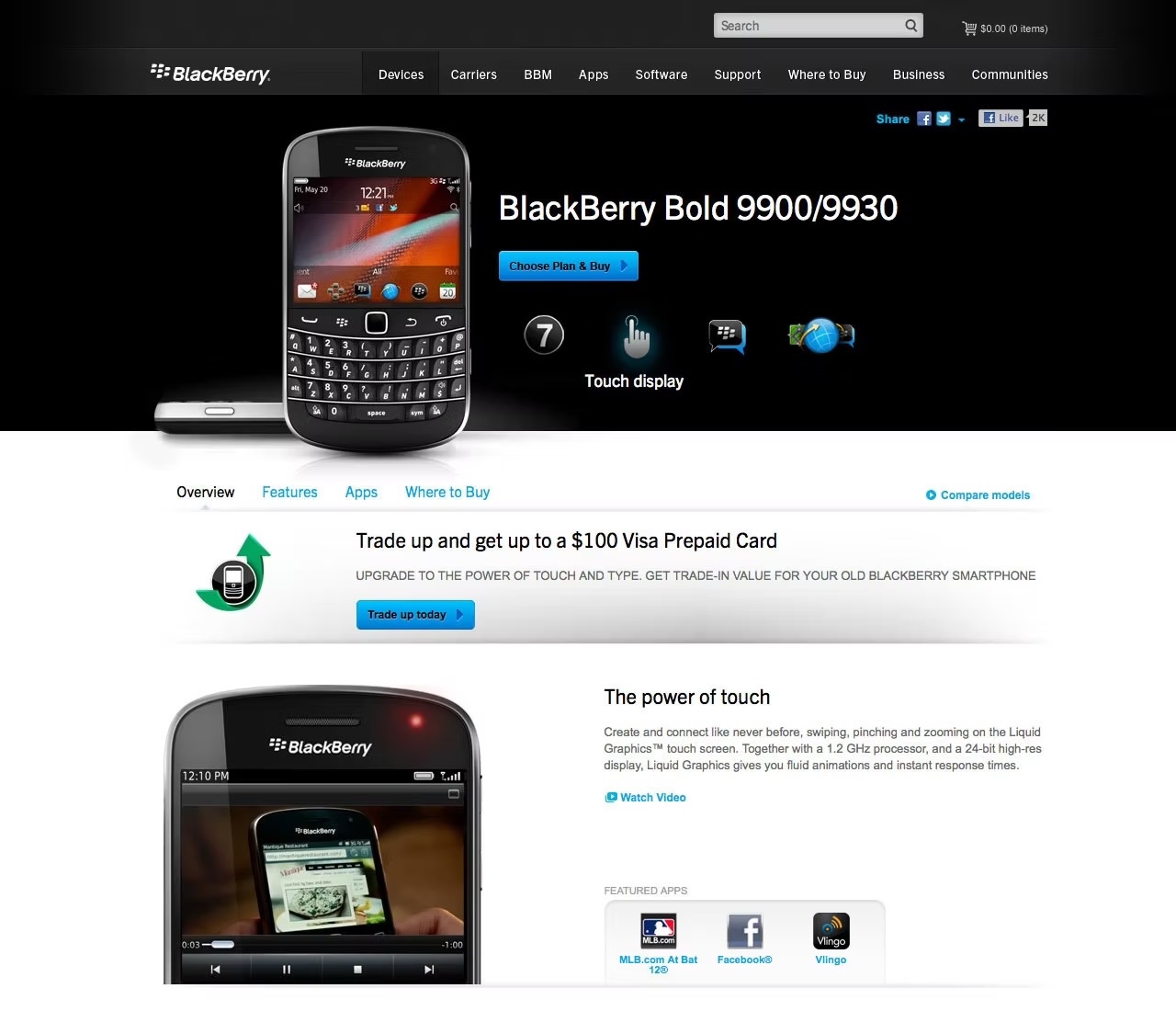
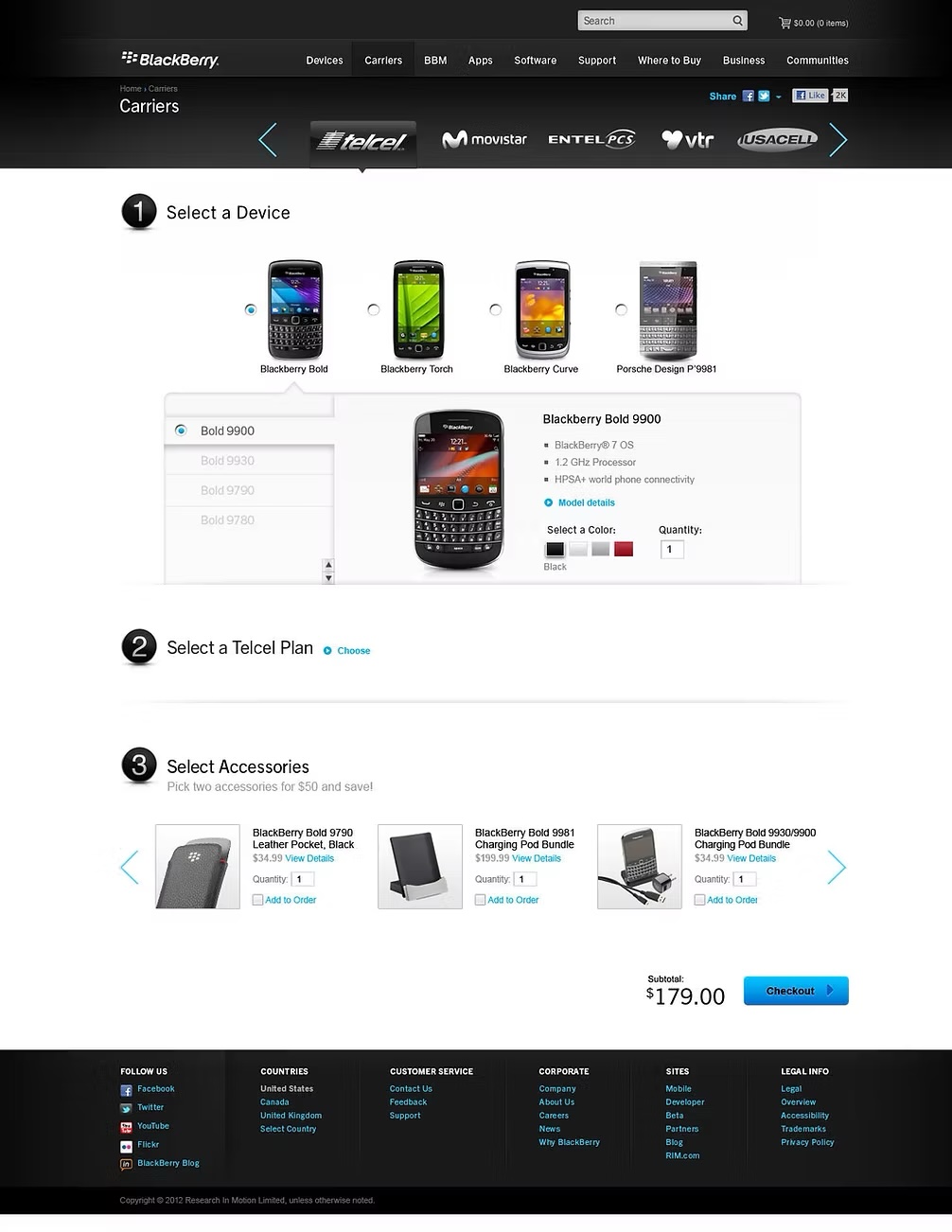
I was UX lead and co-creative director, working with RIM brand stakeholders and the Rosetta account team. We designed an online lead-generation flow that bundled specific phones with dealer fulfillment. The customer could browse, compare features, see offers, and check out on BlackBerry.com. The dealer received a closed sale, with room to cobrand the experience and follow up on accessories and local service. RIM kept the customer as an owner, with ID and status intact, instead of a prospect who might vanish at the store.
We ran low- and high-fidelity prototypes for that path, and we also worked through carrier-side signup flows with partners including Telcel, Mexico’s largest provider. Same region, same underlying problem: touchpoints RIM didn’t fully control.
Model browse
Offers and incentives
Plan and buy
Checkout