The situation
What we were solving When I got to Foot Locker, the company ran nine retail brands. Foot Locker, Eastbay, Lady Foot Locker, Kids Foot Locker and the rest were all bolted onto a homegrown ecommerce platform built and run out of the Eastbay facility in Wisconsin. My job was to keep the front end clean and consistent, optimize the conversion funnel, and move brands to Magento without breaking live stores.
How do you replace the platform under nine live stores without breaking anything?
We didn't try to move all nine at once. That would have been a mess. Instead we built a layer in the middle called FLAPI, the Foot Locker API, that sat between the old system and the new one. With that in place, each brand could move to Magento on its own schedule. We built reusable cart and checkout patterns that worked the same way underneath, then reskinned them for each store as it came online.
So the team kept shipping while the platform changed underneath them, and customers never saw the seams. They shopped their brand and checked out on their brand, same as always. What changed was everything we could do once the brands ran on a shared Magento foundation.
The work
Polaris was the case for shopping all nine brands at once.
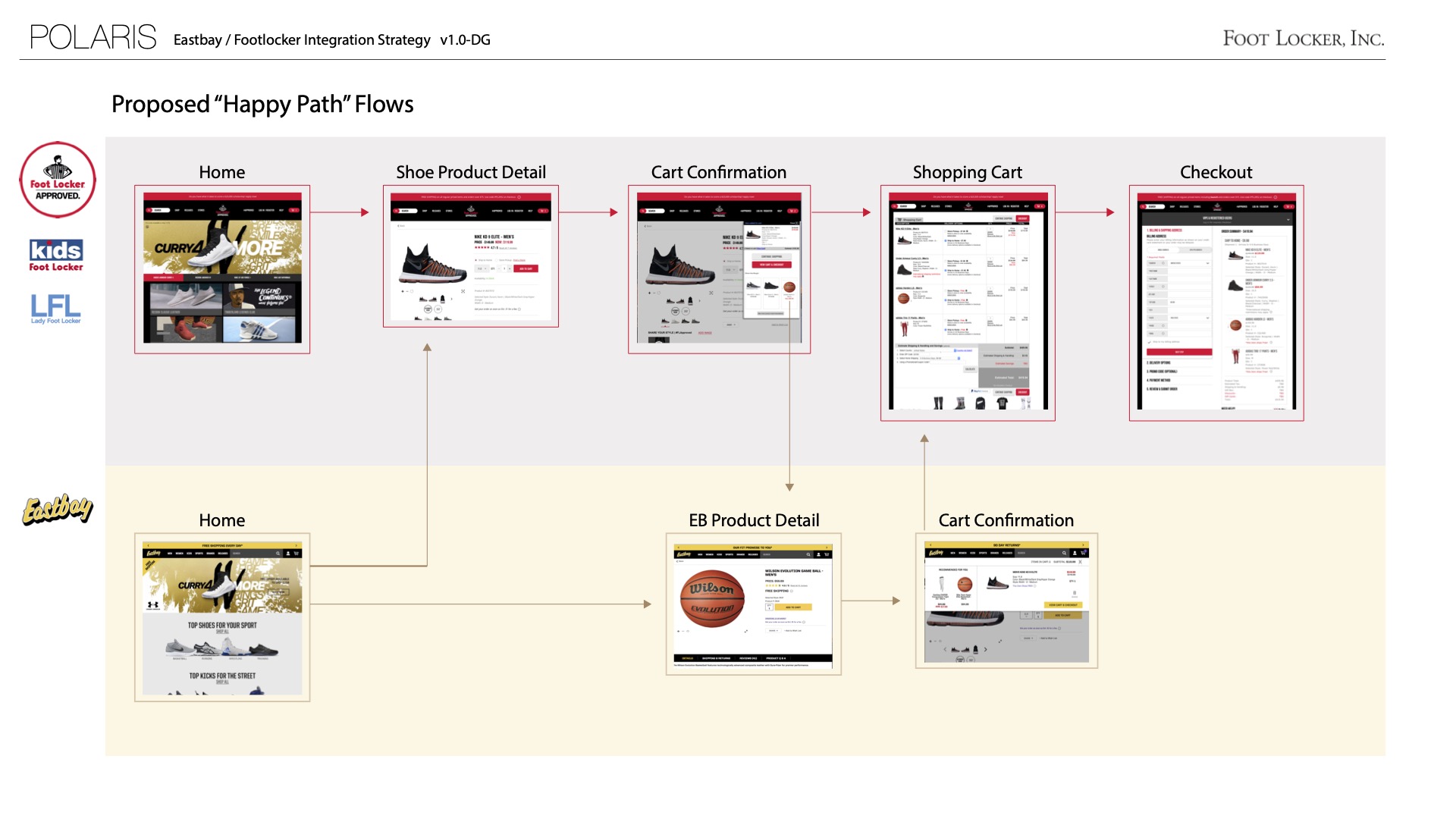
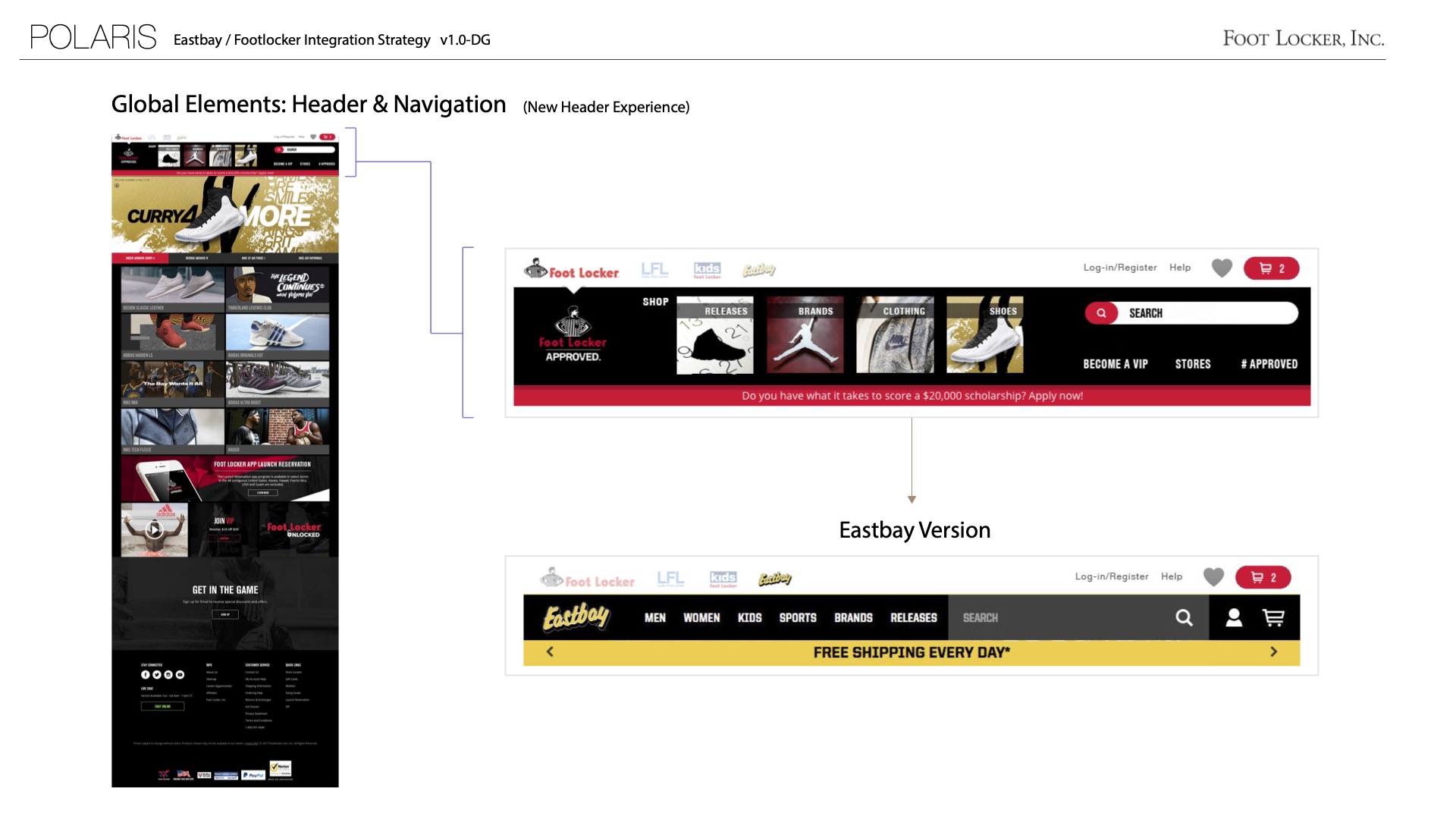
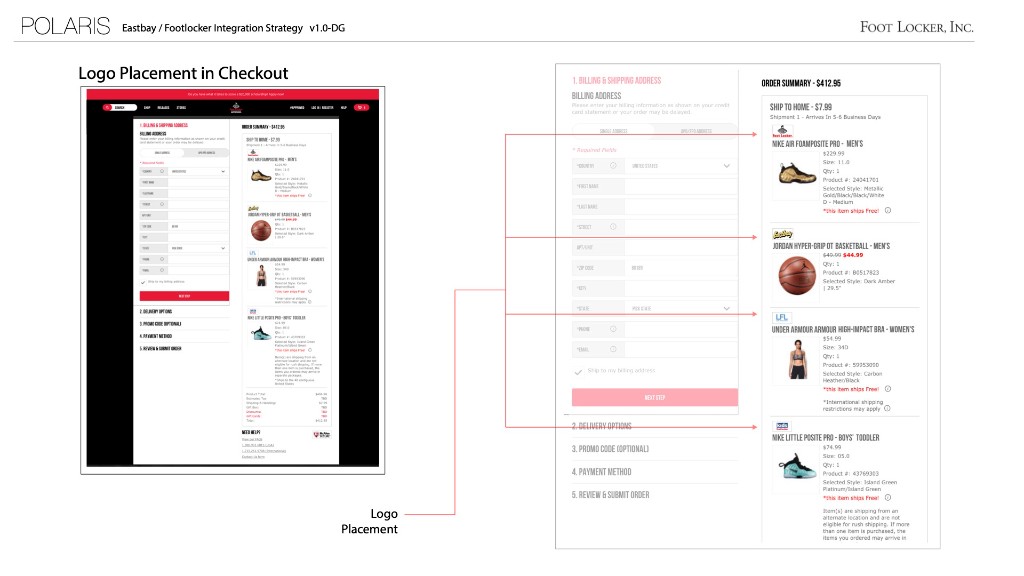
Once brands were moving to Magento, I developed a project called Polaris with the CMO. The proposal was to let someone shop across all nine brands and check out once. A pair of Foot Locker sneakers, an Eastbay basketball and a Kids Foot Locker order in the same cart, with each line showing which brand it came from so nothing got confusing.
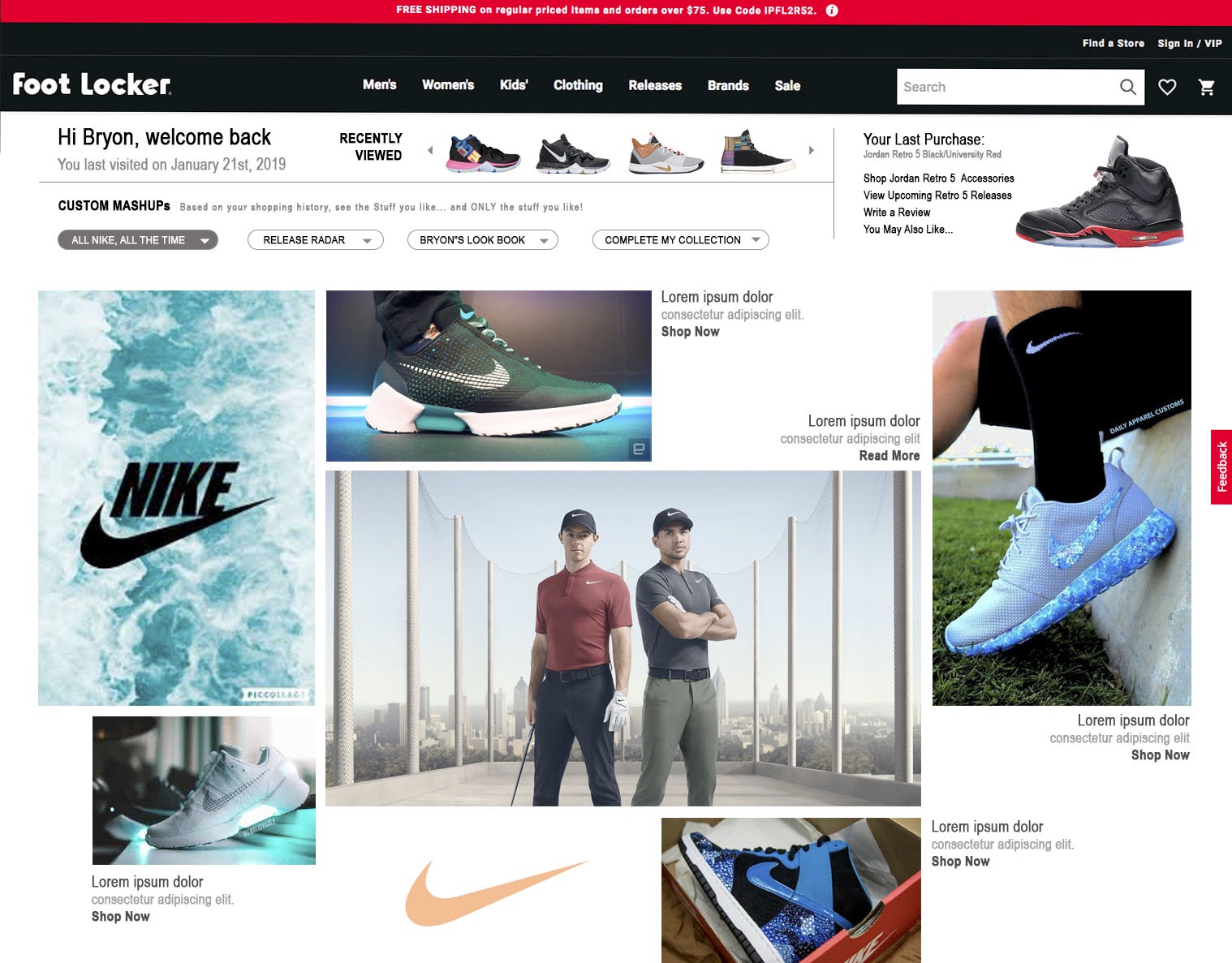
Polaris also framed how the new FLX loyalty program could follow the customer across touchpoints. My part of FLX was messaging and experience strategy. Polaris never launched, because the replatform took the capacity, but the flows and headers here show the direction we were building toward.
Polaris · shopping flows